


Africa's AI Talent Diaspora Flywheel: Remittance-to-VC and Startup Acceleration in 2026
The African diaspora—often called the continent’s “sixth region” by the African Union—has long been a source of financial support through remittances. In 2024–2025, sub-Saharan Africa received record

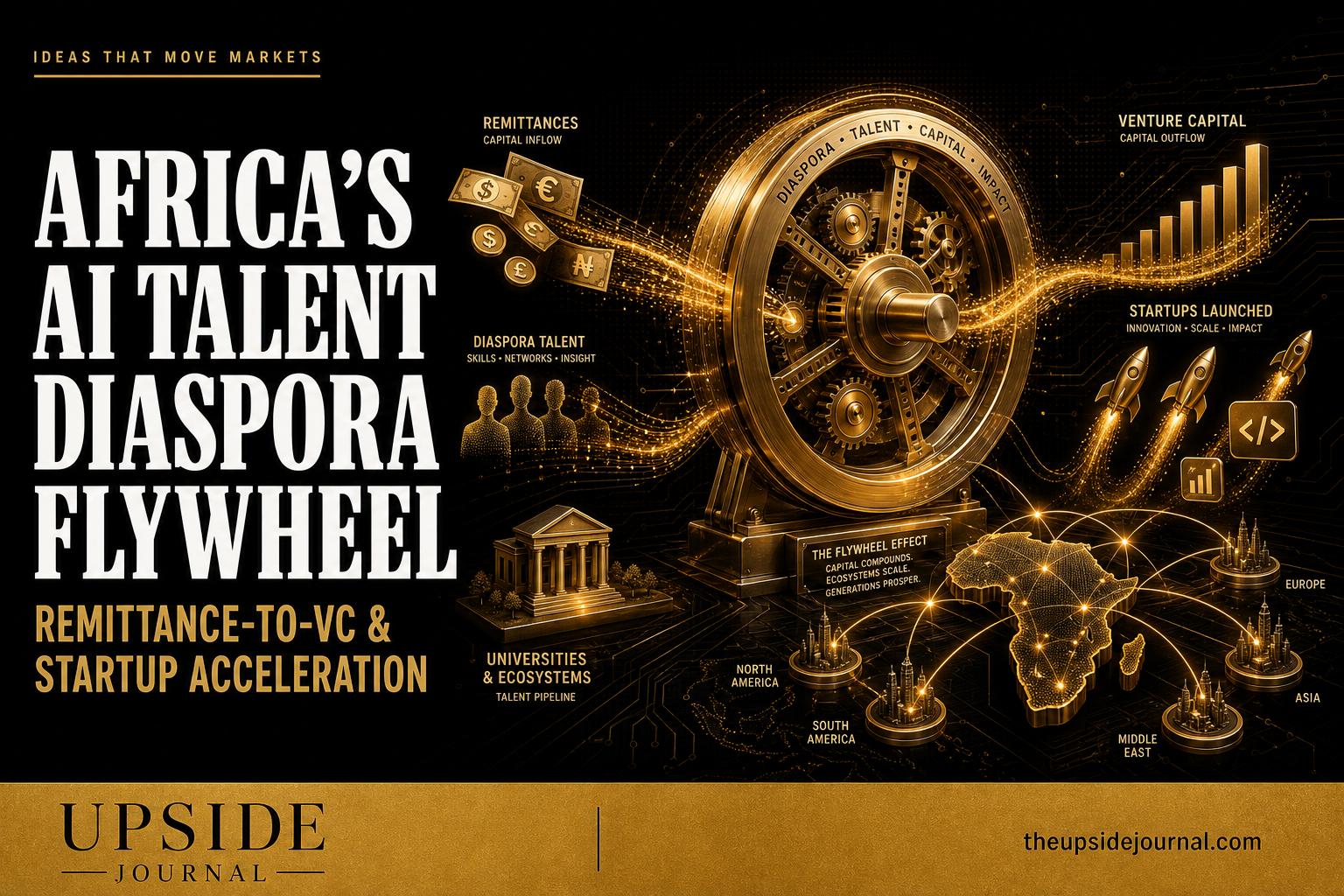
Africa's AI Talent Diaspora Flywheel: Predictable Remittance-to-VC and Startup Acceleration in 2026
The African diaspora—often called the continent’s “sixth region” by the African Union—has long been a source of financial support through remittances. In 2024–2025, sub-Saharan Africa received record inflows exceeding $56 billion annually. Yet in 2026, a more powerful transformation is underway: the AI talent diaspora flywheel, where skilled African professionals abroad are converting personal remittances, expertise, and networks into venture capital and startup acceleration back home.
This is not charity. It is a predictable, self-reinforcing economic engine blending cultural ties, technical excellence, and market opportunity. As Africa’s AI market heads toward $16.5 billion by 2030, the diaspora is emerging as a critical bridge—turning brain drain into brain circulation and capital circulation.
The Scale of the African AI Talent Diaspora
Estimates place the global African diaspora population above 34 million, with significant concentrations in the United States, United Kingdom, Canada, France, and emerging hubs in the UAE and Germany. Within this group, AI, machine learning, software engineering, and data science talent is disproportionately represented.
Thousands of African-trained engineers and researchers work at leading global tech firms (Google, Meta, Microsoft, OpenAI-adjacent labs) and top universities. Many maintain strong ties to home countries through family, alumni networks, and cultural identity. Events like the African Diaspora Investment Symposium (ADIS26) in Silicon Valley have become catalysts, convening talent, capital, and policymakers around themes including AI, fintech, talent development, and partnerships.
In 2026, this talent pool is no longer just sending money home. They are investing time, expertise, and capital—founding companies, advising startups, and channeling remittances into angel rounds and dedicated diaspora investment vehicles.
From Remittances to Angel & VC Capital
Traditional remittances remain vital, supporting consumption and stability. But a growing portion is being redirected toward productive investment. Diaspora-led funds and angel networks are channeling resources into AI-enabled startups addressing local challenges in healthcare, agriculture, education, and financial services.
African startups raised billions in recent years, with diaspora investors playing an increasingly visible role. Local investors (including diaspora returnees and networks) anchored a large share of deals in 2025–2026, reflecting a localization trend even as global VC shifted toward US AI boom. Remittance fintechs like LemFi, NALA, and Wave are expanding into wealth management and investment products tailored for diaspora users, smoothing the path from personal transfers to startup funding.
This creates a predictable flywheel: remittances build family stability and trust → talent networks identify opportunities → diaspora capital de-risks early-stage AI ventures → successful startups generate returns and jobs → more remittances and reinvestment.
Underreported Talent Networks & Returnee Flywheels
Beyond capital, the human element is powerful. “Returnee” or “boomerang” professionals bring global standards, investor relationships, and product discipline back to African hubs (Nairobi, Lagos, Cape Town, Kigali, Accra).
Networks such as the African Olympiad Academy and diaspora-focused AI communities facilitate knowledge transfer, mentorship, and collaborative projects. ChipMango, a semiconductor and AI edtech startup operating between the US and Nigeria, exemplifies this: training Nigerian engineers while embedding them in global projects.
These networks reduce information asymmetry for investors and accelerate go-to-market for startups. In 2026, we see more hybrid teams—core execution in Africa, strategy and capital access from diaspora hubs.
Case Studies: Real-World Acceleration in 2026
Case 1: Fintech & Remittance InfrastructureCompanies like LemFi and NALA have raised significant funding (including stablecoin investments) by serving diaspora-to-Africa corridors. These platforms are evolving into full financial ecosystems, enabling not just transfers but investment products that funnel diaspora savings into African startups.
Case 2: AI Talent & EdtechChipMango integrates microchip design services with AI-powered training, developing industry-ready talent while generating revenue from global clients. This dual model leverages diaspora expertise to close Africa’s AI skills gap.
Case 3: Sector-Specific ApplicationsStartups in agritech, healthtech, and climate tech are attracting diaspora capital. AI solutions for smallholder farmers, local language models, and supply chain optimization benefit from founders who understand both global benchmarks and African realities.
ADIS26 and similar gatherings have already produced direct investments, with founders securing commitments through diaspora connections.
Opportunity Maps for Operators & Investors
Talent Hotspots: Nigeria, Kenya, South Africa, Ghana, Senegal, Rwanda. High-Potential Sectors: AI for agriculture, healthcare diagnostics, financial inclusion, climate adaptation, education. Investment Vehicles: Diaspora angel syndicates, dedicated VC funds with home-country mandates, corporate venture arms from telcos and banks. Risk Mitigants: Hybrid governance models, sovereign data practices, and local partnerships.For operators: Build products with dual local/global appeal. For investors: Prioritize teams with strong diaspora ties for better de-risking and distribution.

The Predictable 2026–2030 Flywheel
1. Remittance Base → Stable capital inflow.
2. Talent Circulation → Skills and networks transfer.
3. Early-Stage Funding → Angel and seed acceleration.
4. Startup Maturation → Revenue, jobs, exits.
5. Reinvestment & Returns → Strengthened middle class and further capital.
Projections show Africa’s AI market scaling rapidly, with diaspora capital helping close funding gaps amid global VC concentration in US AI. Success will depend on policy support (visa facilitation, investment incentives), infrastructure (data centers, connectivity), and continued cultural bridging.
Actionable Playbook for Diaspora & Home-Market Builders
- For Diaspora Professionals: Allocate 5–10% of remittances/income to angel investing or funds. Mentor via networks. Consider returnee or hybrid roles.
- For African Founders: Highlight diaspora team members and advisors. Build global distribution from day one. Engage in events like ADIS.
- For Policymakers & Institutions: Streamline investment regulations, offer diaspora incentives, invest in AI education and data infrastructure.
- For Brands & Enterprises: Partner with diaspora-led startups for authentic market entry and innovation.
The African AI talent diaspora flywheel is one of the most under-appreciated forces in global innovation. In 2026 and beyond, it promises not just economic acceleration but a redefinition of how talent, capital, and culture flow across borders—building a more resilient, self-determined African tech ecosystem.
What role are you playing—or could play—in the Africa AI diaspora flywheel? Share in the comments or join our premium membership for deeper intelligence briefings, operator networks, and exclusive diaspora investment maps. Intelligent. Cultural. Global. Human.“Where the world’s conversations become movements.”